What Is Tech Neck? Causes, Symptoms, and How to Fix It

Your neck wasn’t designed to crane downward and look at your phone or your tablet. Or bend forward all day over your laptop.



Tech neck is the pain and muscle strain that occurs when you look down at your devices for hours on end. Doctors may also refer to this as “text neck syndrome.” These days, tech neck is one of the most prevalent issues seen in primary care physicians’ offices.
Approximately 73 percent of university students surveyed experienced neck or back pain, according to a 2023 study. And one study that specifically focused on heavy smartphone users found rates of the condition to be over 60 percent.
If you play games on your phone, surf social media in bed or work from a laptop without an external monitor, you may be at risk of developing tech neck. But don’t worry, the tech neck is fixable.
Why does looking down hurt so much?
Looking down can hurt because your head leaning forward puts tremendous strain on your neck muscles.
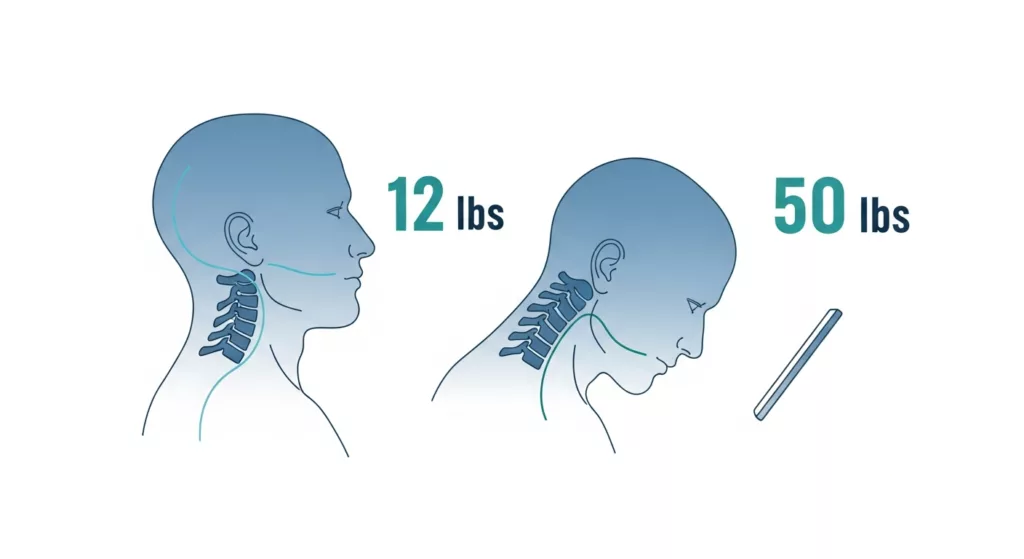
An upright head weighing 10 to 12 pounds rests on top of your spine. Lean it forward 15 degrees and the load on your neck muscles nearly doubles. Tilt it 45 degrees (roughly where most people hold their heads when staring at their phone), and your neck muscles are now supporting nearly 50 pounds. That’s essentially a sack of potatoes resting at the base of your skull.
You have two main neck muscles that do all the heavy lifting: the Erector spinae and trapezius muscles that run along your upper spine and back of your skull. Leaning your head forward places so much strain on those muscles. When you hold your head in this position for long periods of time, your muscles become overworked and you feel pain. Eventually, that pain can spread down your cervical spine. Hunching over like this also compresses your discs and causes deterioration of the joints between each vertebra.
Think about holding a bowling ball out in front of you with your arms fully extended versus simply holding it over your head. Even though it’s the same weight, your muscles have to exert drastically different amounts of energy. That’s exactly what your neck goes through each time you crane your neck to glance at your cellphone.
Symptoms to watch for
Tech neck doesn’t always manifest as “neck pain.” Instead, it attacks you with symptoms that are often attributed to stress or bad sleeping positions.
For some people, symptoms aren’t even noticeable until they lift their head from their phone after 20 minutes and realize their neck feels like they just finished rounds at the gym. Common symptoms include:
- Occasional achy, stiff neck after prolonged screen time
- Tightness at the base of your skull leading to tension headaches
- Tightness in your shoulder blades
- Restricted range of motion when tilting your head forward or shaking your head side to side
With more severe forward head posture, the persistent forward pull can begin to affect more than just muscles. It speeds up degeneration of the cervical discs and if one begins to bulge or herniate, it can press against surrounding nerves. That’s when you may start experiencing tingling and numbness that travels down your arms, often signaling a pinched nerve in your cervical spine. If this sounds like you, please seek medical care.
Gamers have it worse than most
Most tech neck articles focus on office workers and texters. But gamers (mobile gamers especially) face the same problem, often due to longer uninterrupted sessions. An 2017 study found that smartphone gaming changes posture and ramps up muscle activation in the neck and shoulders within just five minutes of play.
Longer sessions make things worse. More than 54 percent of smartphone gamers ages 17-28 report pain in the neck, shoulders, and lower back region after approximately half an hour of gaming.
Why gamers specifically? Gaming is immersive. You lose track of time, which means you lose track of posture. An office worker shifts in their seat during a meeting or gets up for coffee. A gamer locked into a match or a puzzle chain stays locked in. On top of that, handheld devices force the worst neck angle by default. A desktop monitor sits at eye level. A phone in your hands? That’s 45 to 60 degrees of forward tilt, easy.
Stress and focus are the other culprits. When you’re stressed out or focusing on a certain task, you tend to clench muscles in your neck and shoulders you didn’t know you had. Many experts state that your body will naturally stiffen up when placed under stress or focusing heavily on a particular task. A competitive match can cause that type of stress just as easily as that deadline at work.
Gaming isn’t usually the issue. Your gaming habits are.
How to prevent and fix tech neck
You can prevent and fix tech neck by reducing the angle and breaking the position of your device. Everything else is a variation on those.
Get your screen up
The easiest adjustment you can make is to bring your screen up to eye level. At your desk, set up a monitor arm or laptop stand so the top third of your screen is at eye level. Holding your phone? Hold your phone up instead of bending your neck down to look at it. It will feel strange for a day or so, but then you won’t think about it anymore.
This holds true for gaming too. If you’ve been gaming on your phone try transitioning to playing PC games or games on your tablet held at eye level. The difference in posture is drastic.
Choose a gaming provider that offers multi-device compatibility
if you play Plarium games, you can switch between devices without sacrificing your progress. Such titles are available on phone, PC, and web browser, so you get to start a gaming session on your phone during commute, then continue the same session on desktop at home with better ergonomics.
This flexibility gives you room to adjust your posture and avoid being locked into neck-straining mobile gaming sessions.
Move every 20 minutes
Put a timer somewhere you’ll see it and try to adjust position every 20 minutes or so. Not just look up from your desk/screen. Get up. Walk around. Stretch your arms and legs. The longer your muscles and joints stay in one position, the less blood flow they get. The fluids that help lubricate your joints also come to a standstill.
If you’re gaming and everything naturally pauses every few minutes for load screens/matchmaking queues/etc., use those times as your reminder to stand up and roll your shoulders.
Lean back (sitting straight is overrated)
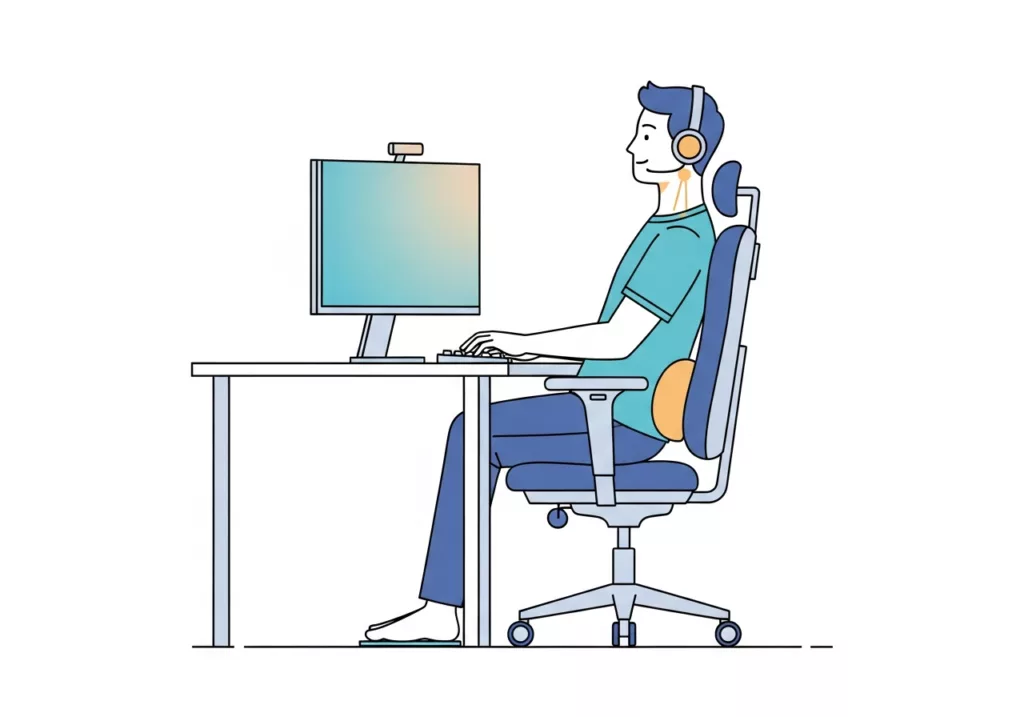
No one sees this coming. Sitting perfectly upright is terrible for your neck. According to Dr. Riew, you should be reclined 25 to 30 degrees in your chair with proper lumbar support.
When you lean back, your weight is supported by the chair and not your spine. Your neck muscles can relax when they don’t have to hold your head up. Also a good test: If you were able to fall asleep in that position, would your head flop all the way back? If yes, you’re good.
Strengthen and stretch daily
There are some specific exercises you can do daily to strengthen the muscles that support your head.
- Chin tucks
- Sit or stand up straight.
- Tuck your chin straight back as if you’re trying to make yourself look like you have a double chin.
- Hold for 5 seconds
- Do this 10 times two-to-three times per day
- Scapular retractions
- Squeeze your shoulder blades together and down
- Hold for 15 seconds
- Do this 10 times a day
- Pulling your shoulders back and down forces your neck back into correct posture
- Neck resistance
- Put your hand on the side of your head
- Gently push into your hand for 15-20 seconds
- Do this on all four sides: left, right, forward, back.
- Simple to do when taking breaks from gaming or working at your desk
When to see a doctor
Most cases of tech neck will improve with the changes listed above in a matter of weeks. However, there are a few symptoms which can indicate something more serious is going on.
Make an appointment with your doctor if you experience:
- Persistent numbness, tingling, or weakness in your arms.
- Balance problems or neck pain after two months of dedicated care.
Small fixes, big difference
Tech neck is common. It’s also becoming more common as screens become more pervasive in our lives. And it’s not limited to those who work in offices. Anyone who spends prolonged time with their head tilted downward staring at a screen is at risk. That’s over 205 million Americans who game at least once a week.
You don’t need fancy equipment or to completely overhaul your lifestyle. Just lift your screen. Take breaks every twenty minutes. Perform your chin tucks. Listen to your neck when you know you’re going to be scrolling for hours on end. Simple shifts in your daily routine can stop tech neck in its tracks before it becomes a problem that’s harder to fix the longer you ignore it.